Founder / Ethnographer
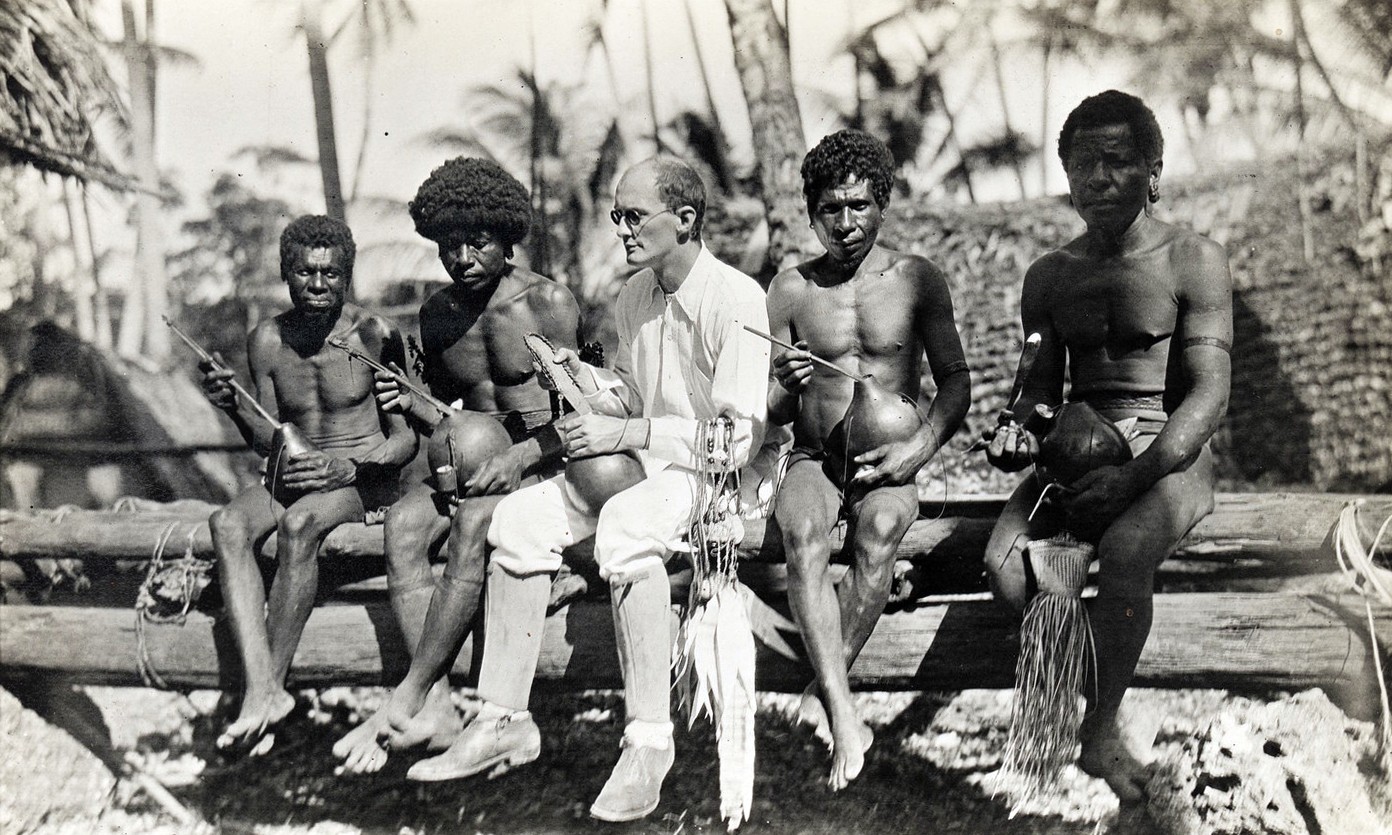
There is a moment, familiar to anyone who has done fieldwork, when the thing you came to study stops being an object and starts being a world. You stop seeing behaviours and start seeing reasons. The gap between what people say they do and what they actually do, which at first seems like noise, reveals itself as the most important data you will ever collect. I learned this as an anthropology student. I use it every single day as a founder.
Before I started a company, I trained as a doctor. Medicine teaches you to listen, or at least it is supposed to. But I found early on that the clinical encounter, compressed into its ten or fifteen minute slot, was an impoverished version of understanding. Patients would tell me one thing and mean another. They would nod along to a treatment plan they had no intention of following. They would present with a symptom that was really a proxy for something else entirely, something social, something economic, something rooted in a logic that the biomedical model had no vocabulary for. I wanted a better framework. So very early on, I decided to formally combine my medical degree with anthropology. Not as a detour from medicine but as an extension of it. I wanted to understand not just what was wrong with people but what it was like to be them.
That impulse has turned out to be the single most transferable skill I have ever developed.
The startup world talks endlessly about being "customer obsessed," but the dominant mode of customer understanding remains remarkably shallow. You fly in for a sales call, you run a pilot, you look at usage metrics, you schedule a quarterly business review over Zoom. The user, the actual human being whose daily work your product is supposed to transform, remains an abstraction. You know their title. You know their pain points, or rather you know the version of their pain points that has been filtered through three layers of organisational hierarchy and translated into the language of your own product categories. You do not know what their morning looks like.
So when we begin working with a clinic, I spend days inside it. Not in a conference room with the owner. I sit at the front desk. I watch the receptionist toggle between seven browser tabs. I listen to the way she answers the phone, the micro decisions she makes about which caller to put on hold, the shorthand she has developed with the medical assistants, the workarounds she has invented because the official system is too slow or too rigid. I talk to the billing team, the office manager, the nurses. I ask a hundred questions and then I ask fifty more. I am not looking for a feature request. I am looking for the underlying structure of their daily experience, the pressures and rituals and frustrations that they have stopped noticing because they have become the water they swim in.
This is ethnography (i.e., the heart of anthropology). Not a buzzword. A method, developed over more than a century of social science, for understanding how people actually live rather than how they claim to live or how you assume they live. The core principle is deceptively simple. You must be present, for long enough and with enough patience, that the performance people put on for visitors begins to dissolve and the real patterns emerge.
The returns are enormous and specific. Sitting inside clinics taught me that the front desk is not an administrative function but the emotional centre of the practice, the place where patient anxiety meets institutional friction at scale. I learned that phone calls are not a single category of interaction but dozens of distinct types, each with its own logic and its own failure modes. I learned that physicians, who are nominally in charge, often have the least accurate picture of how their own operations work, because the staff have learned to absorb complexity on their behalf. These are not insights you arrive at through cleverness. They are things you see because you were in the room long enough.
And I return to the clinics. That part is not optional. The world you are studying keeps changing. Staff turn over. New frustrations emerge as old ones are resolved. The trust that makes people willing to show you the mess rather than the polished version is an asset that compounds over time, but only if you maintain it.
None of this requires a degree in anthropology. What it requires is a fundamental reorientation of where you believe insight comes from. Not from your own brilliance. Not from market analysis. Not from the aggregate. But from the particular. From the woman at the front desk who has been doing this job for eleven years and knows things about how healthcare actually works that no executive, no consultant, and no technologist has ever thought to ask her about.
Go sit with her. Watch. Listen. Then build something worthy of what you learned.